Crawl space repair fixes damage: rotted joists, sagging girders, foundation cracks, failed drainage. Crawl space encapsulation controls moisture so the damage does not come back. Most wet crawl spaces in Georgia need one or the other. Some need both, in that order. This guide shows you how to tell which one your crawl space needs.
If you are still asking whether encapsulation is worth doing at all, start with our guide on whether crawl space encapsulation is worth it. If you want to know how encapsulation differs from a sealed crawl space, read encapsulated vs sealed crawl spaces.
Start With the Symptom
Repair and encapsulation solve different symptoms. Sagging floors, cracked foundation walls, and bowing beams are structural and point to repair. Musty smells, condensation on ductwork, and high humidity are moisture issues and point to encapsulation. Standing water points to drainage before either. For the full list of warning signs, see crawl space moisture problems and how to fix them.
Crawl Space Repair
Any issues in your crawl space, such as moisture buildup, structural damage, or pests, can significantly affect your home’s integrity. Crawl space repair aims to address these problems by fixing the underlying issues to restore safety and stability. Identifying and remedying issues in this often-overlooked part of your home ensures your living environment remains healthy and secure.
Basic Repair Methods
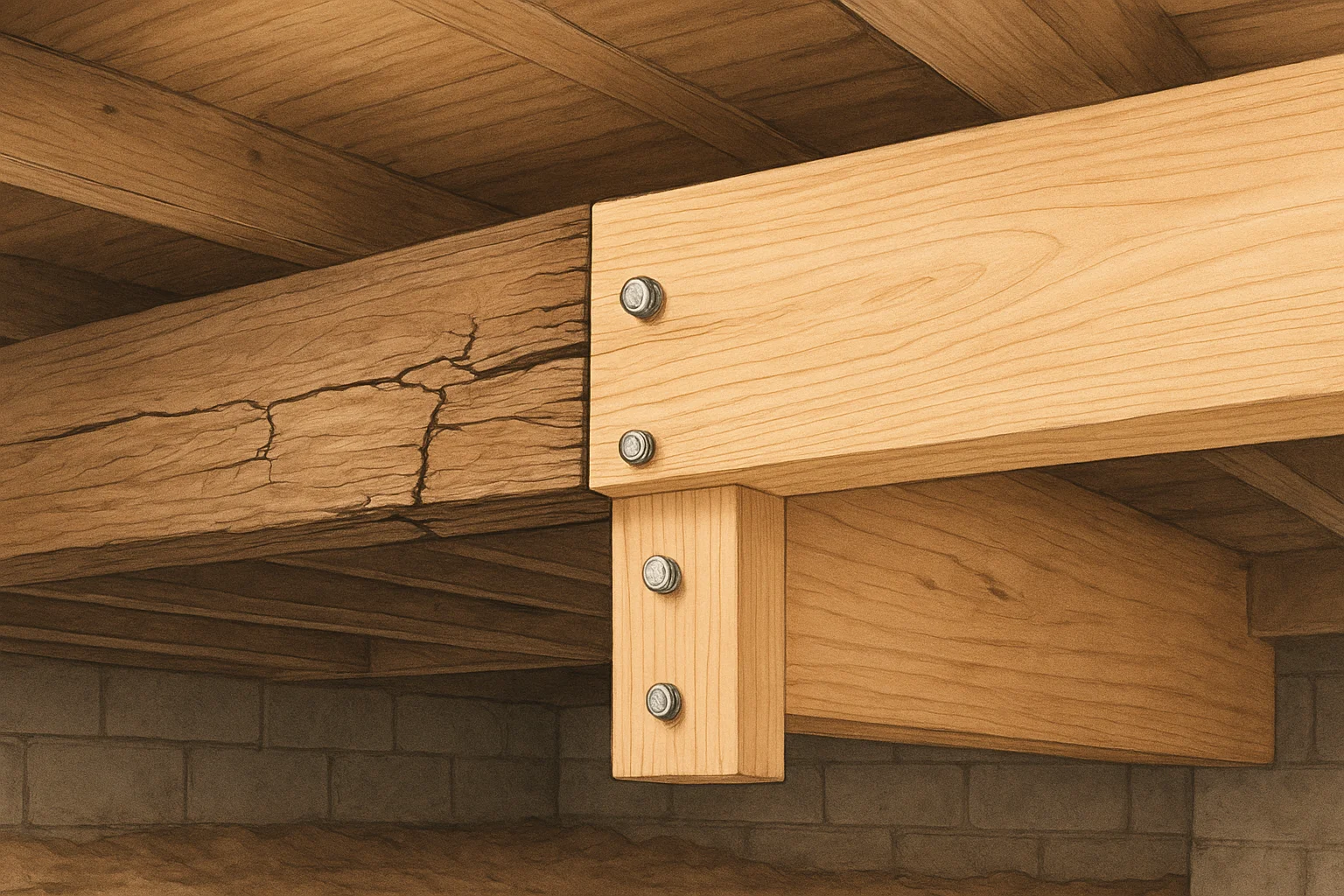
Repair means fixing what is already broken. Typical jobs include sistering or replacing rotted floor joists, replacing girders and sill plates, installing supplemental piers under sagging beams, sealing foundation cracks, and adding interior drainage with a sump pump where water collects. Each one restores the structure. None of them lowers humidity.
When to Choose Repair
Choose repair when the problem is structural, and the crawl space is otherwise dry. Examples: a rotted joist under a bathroom from an old plumbing leak, a girder sagging under an addition, a foundation crack letting water in at one corner. Fix the damage, fix the cause, done. If the space is damp everywhere and the wood is soft in more than one spot, repair alone will not hold. The moisture that rotted the first joist will rot the replacement.
Crawl Space Encapsulation
Encapsulation seals the crawl space from ground moisture and outside air with a reinforced vapor barrier, sealed vents, wall insulation, and a dehumidifier. It does not repair damage. It stops damage from continuing. See our crawl space encapsulation service for what a full system includes.
Cost Analysis
Pricing depends on the condition of the space more than its size. See our crawl space encapsulation cost guide for more information.
When to Choose Encapsulation

Choose encapsulation when the problem is moisture across the whole space. Examples: humidity above 70 percent through summer, condensation dripping from ductwork, white or dark mold on the subfloor, a musty smell upstairs. If the wood is still sound, encapsulation alone is the fix. If any framing is already rotted, repair comes first, and encapsulation follows.
Comparing Both Solutions
|
Question |
Crawl Space Repair |
Crawl Space Encapsulation |
Both |
|
What it fixes |
Rotted wood, cracks, sagging, drainage failures |
Humidity, condensation, mold conditions, air quality |
Structural damage caused by ongoing moisture |
|
When it is enough on its own |
Dry space, one damaged area, cause already fixed |
Sound framing, moisture problem everywhere |
Damaged framing in a wet space |
|
What it does not do |
Lower humidity or stop the next leak |
Replace rotted wood or fix cracks |
Nothing left out |
|
Typical timeline |
1 to 3 days |
2 to 4 days |
3 to 6 days |
|
Ongoing upkeep |
None after repair |
Dehumidifier filter and drain, twice a year |
Same as encapsulation |
|
Permit usually needed |
Structural work, yes |
Dehumidifier circuit or drainage, usually |
Yes |
Making the Right Choice
Many homeowners face the dilemma of opting for crawl space repair or encapsulation. The choice largely depends on your property’s unique conditions, including moisture levels, current damage, and long-term plans for the space. Evaluating these factors can help you make an informed decision that suits your home’s needs.
Climate Considerations
North Georgia, Tennessee, and the Carolinas sit in the humid zone. Vented crawl spaces here run above 70 percent humidity most of the summer. In this climate, repair without moisture control is a repeat visit in five years. In drier climates, repair alone holds up. Here it rarely does.
Property Assessment
Alongside climate, a thorough property assessment is imperative. Inspect your crawl space for water damage, mold, and structural issues, as these will influence your decision. Understanding the current state of the space will determine if repairs are sufficient or if encapsulation is necessary for long-term protection. Check for signs of moisture, like puddles or damp spots, and any visible mold or rodent activity. This will give you a clear picture of what you’re dealing with.
Budget Factors
Below are some budget factors to consider when making your decision:
- Initial costs of repair or encapsulation
- Potential long-term savings on energy bills
- Impact on home resale value
- Maintenance costs associated with each option
What the Inspection Decides
A professional assessment is necessary for practical solutions to your crawl space concerns. Experts will evaluate your crawl space’s condition and suggest whether repair or encapsulation suits your needs. Their experience and knowledge can help you avoid potential issues and costly repairs in the future.
Inspection Process
The inspection answers three questions. Is the wood sound? We meter joists and girders. Readings above 19 percent moisture content or soft wood under a probe mean repair. Where is the water coming from? Grading, gutters, plumbing leaks, or groundwater each get a different fix. How humid is the space through summer? A hygrometer reading and the condition of the ductwork tell us whether encapsulation is needed or a vapor barrier and drainage are enough.
You get a written scope showing repair items, moisture control items, and the order they happen in. Some homes need one line item. Some need the full list. Request a free crawl space inspection.
Tri-State Waterproofing has handled crawl space repair and encapsulation across North Georgia for over 20 years. If you are looking for a professional crawl space repair company in Gainesville, choosing Tri-State Waterproofing means partnering with a team that values quality, reliability, and customer satisfaction. With our expert solutions, advanced techniques, and commitment to long-term results, we ensure your home remains safe, dry, and structurally sound.
FAQs
Q: What are the signs that my crawl space needs repair?
A: Signs that your crawl space may need repair include sagging floors, visible cracks in your foundation walls, or bowing support beams. Additionally, if you notice signs of pests, water pooling, or excessive dampness, these issues could indicate a need for immediate attention. Addressing these problems early can prevent costly repairs.
Q: Is crawl space repair or encapsulation more affordable?
A: Repair is cheaper when one area is damaged, and the rest of the space is dry. Encapsulation costs more upfront but stops the repair cycle in a humid crawl space. When both are needed, doing repair first and encapsulation second costs less than paying for the same repair twice.
Q: Do I need crawl space repair before encapsulation?
A: Yes, if any framing is rotted, any beam is sagging, or water is standing on the floor. Sealing over damage locks it in. Repair and drainage come first; encapsulation follows.
Q: Can encapsulation fix sagging floors?
A: No. Sagging floors are a structural problem: a failed joist, girder, or pier. Encapsulation keeps the replacement from rotting. It does not lift the floor.